
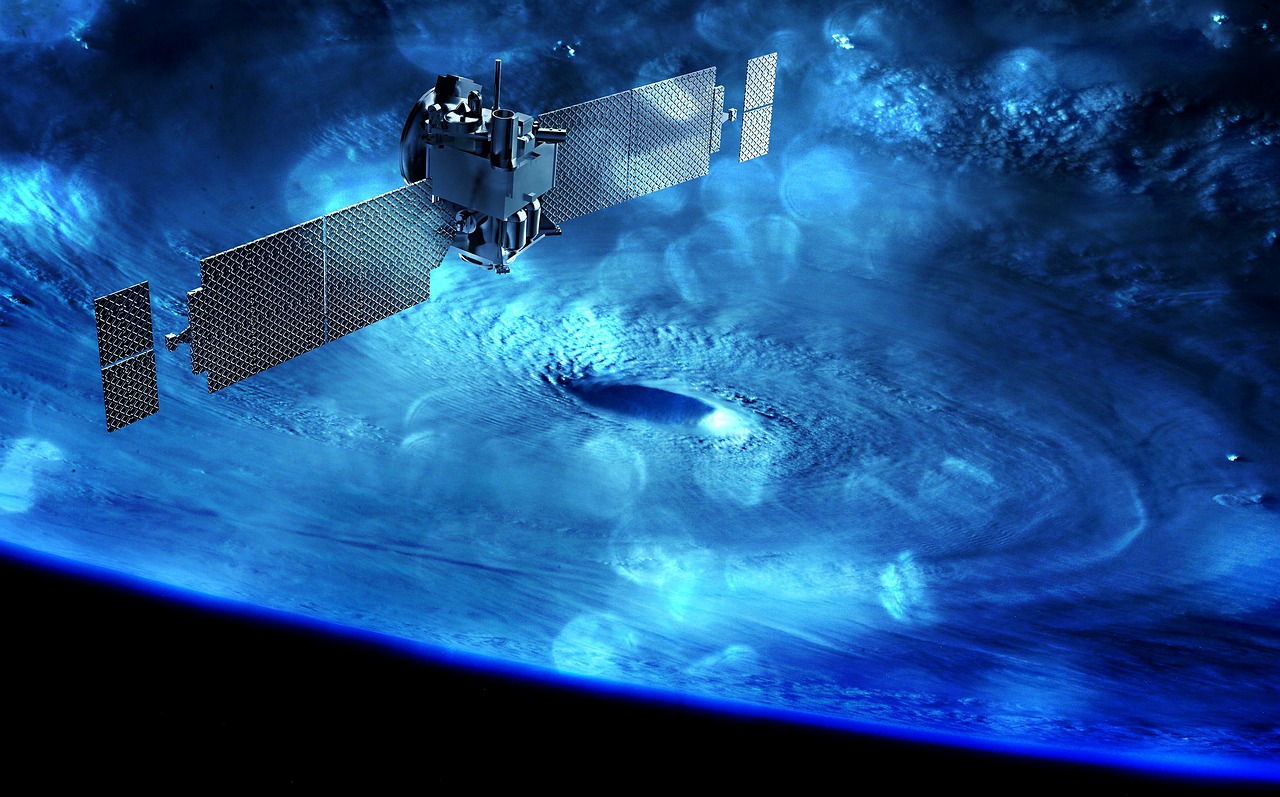
NASA officially announced on Wednesday that it will decommission its primary probe dedicated to studying the Martian atmosphere following 180 days of total communication silence. The decision marks the end of a pivotal era in planetary science, as engineers have exhausted all recovery protocols to re-establish contact with the craft. In this report, you will learn about the technical challenges facing deep-space communications and the legacy of the Mars probe mission as it concludes its operations in early 2026.
- NASA has formally ended the mission after six months of unsuccessful recovery attempts.
- The probe provided three years of critical data regarding the evolution of the Martian climate.
- Future exploration strategies will now shift toward more resilient autonomous relay systems.
The mission originally launched with the objective of deciphering how Mars transitioned from a warm, wet world to the frozen desert observed today. For three years, the probe orbited the red planet, sending back high-resolution spectral data that reshaped our understanding of atmospheric escape. However, the silence that began in mid-2025 has now been deemed permanent by mission control at the Jet Propulsion Laboratory.
What led to the loss of the Mars probe mission?
Engineers suspect a combination of mechanical fatigue and environmental factors contributed to the spacecraft’s sudden silence. During the final weeks of operation, the probe encountered a localized but intense dust storm in the Terra Meridiani region. This event likely obscured the solar arrays or compromised the high-gain antenna alignment required for Earth-bound transmission.
Despite the silence, the mission is not viewed as a failure by the scientific community. The craft exceeded its primary mission lifespan by 14 months, providing a wealth of information that will take decades to fully analyse. Scientists at the NASA Mars Exploration Program have already begun integrating the probe’s final datasets into new global climate models for the planet.
Transitioning from active operations to data synthesis requires a shift in departmental funding. NASA confirmed that the resources previously allocated to the probe’s daily maintenance will now support the upcoming 2028 lander initiative. This ensures that the scientific momentum gained from this atmospheric study continues without interruption.
How does this silence impact future space exploration?
The loss of the probe highlights the inherent risks of long-term robotic exploration in harsh planetary environments. Experts suggest that the next generation of orbiters must feature enhanced artificial intelligence to manage hardware failures without Earth’s intervention. This shift in design philosophy aims to prevent similar “blackout” scenarios in future deep-space voyages.
“The silence of a probe is never the end of the science; it is merely the transition from observation to interpretation,” stated a senior mission specialist during the press briefing.
Data suggests that the probe successfully mapped over 85% of the Martian upper atmosphere before the signal vanished. This map includes the most detailed measurements of isotopic ratios ever recorded, which are essential for dating the loss of the Martian oceans. These findings provide a sturdy foundation for the eventual human-led missions planned for the late 2030s.
What scientific legacy does the probe leave behind?
One of the most significant achievements of this mission was the discovery of seasonal methane spikes in the northern hemisphere. These observations ignited debates regarding potential microbial life or active geological processes beneath the Martian surface. While the probe can no longer provide real-time monitoring, the archive of its findings remains a cornerstone of modern astrobiology.
Furthermore, the mission proved the efficacy of new propulsion technologies tested during its transit to Mars. The ion-drive system allowed for precise orbital adjustments that were previously impossible with traditional chemical rockets. This technological success will likely influence the design of the Canadian Space Agency’s upcoming contributions to the Lunar Gateway project.
The engineering team is currently compiling a final report to document every anomaly leading up to the loss of signal. This document will serve as a troubleshooting manual for future missions facing similar environmental stresses. By studying the “death” of the probe, NASA hopes to extend the life of its successors.
Why did NASA wait six months to call the mission?
The decision to wait 180 days was a calculated move based on the Martian seasonal cycle. Mission planners hoped that as the Martian winter ended, increased sunlight might reboot the probe’s systems if they had entered a low-power safety mode. This “waiting game” is a standard procedure in planetary science, designed to account for all possible recovery windows.
During this period, deep-space network stations across the globe listened for even the faintest carrier signal. The lack of any ping suggests a catastrophic hardware failure rather than a simple power depletion. Consequently, the formal decommissioning allows the agency to reallocate high-demand tracking time to other active missions, such as the Europa Clipper.
The scientific community now turns its focus toward the massive backlog of telemetry data waiting for peer review. Researchers worldwide will continue to publish findings based on the probe’s three-year journey for years to come. The mission’s end serves as a poignant reminder of the fragility and courage inherent in the quest to explore the unknown reaches of our solar system.
As the sun sets on this specific chapter of Martian exploration, the focus shifts to the robust infrastructure remaining in orbit. This network continues to provide the essential communications relay for surface rovers currently exploring the Jezero Crater. The lessons learned from this silent probe will directly inform the resilience of the next fleet of explorers arriving on the red planet by the end of the decade.


