
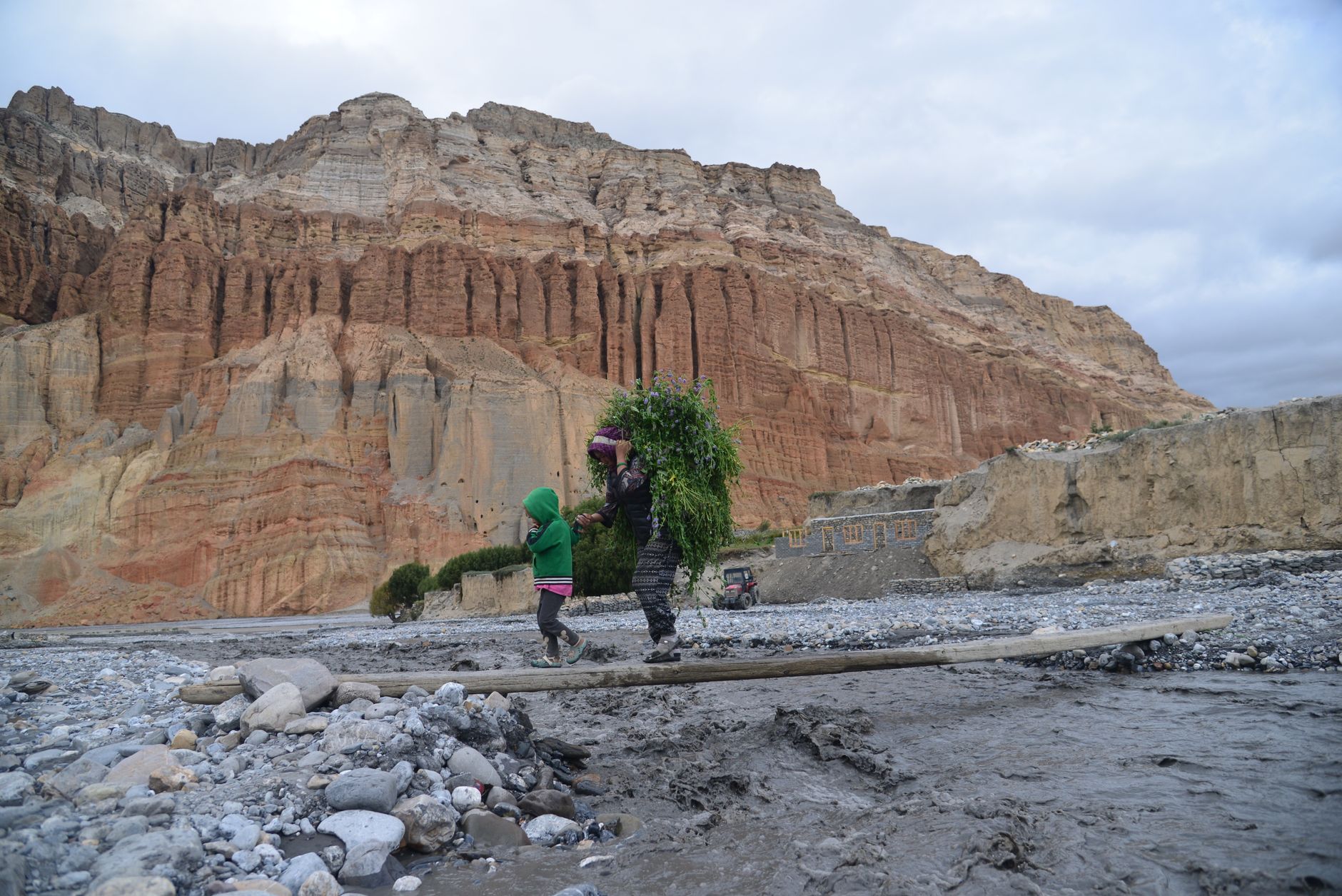
In the rugged terrain of Mustang, Nepal, the village of Lubra faces an existential crisis as climate-driven floods intensify in 2026. This remote settlement serves as the last bastion for the indigenous Bon faith, a spiritual tradition predating Tibetan Buddhism that now risks total erasure. As global temperatures rise, the community struggles to preserve its sacred heritage against the increasing frequency of flash floods from the Panda Khola river. In this report, you will learn how climate change impacts on Nepal’s Bon heritage are forcing migrations and destroying irreplaceable cultural sites.
- Lubra village is the final sanctuary for the pre-Buddhist Bon religion in the Mustang region.
- Accelerated glacial melt in the Himalayas has triggered unprecedented flooding and soil erosion.
- The loss of physical infrastructure threatens the continuity of ancient spiritual rituals and oral traditions.
Lubra was founded in the 12th century by the great Bon scholar Yangton Tashi Gyaltsen. It remains one of the few places where the Bon religion is practised in its purest form. Unlike the more widely known Tibetan Buddhism, Bon emphasizes a deep, shamanic connection to the natural world. This spiritual framework makes the current environmental destruction particularly poignant for the 150 residents remaining in the valley.
The village sits in the rain shadow of the Himalayas, historically receiving very little precipitation. However, shifting weather patterns have replaced steady snowfalls with erratic, heavy rain. These downpours destabilize the arid slopes, leading to massive debris flows that bury agricultural land and homes. The community now faces a choice between abandoning their ancestral lands or watching their history wash away.
How is the changing climate impacting the Panda Khola river?
The Panda Khola river, once a manageable stream, has transformed into a seasonal torrent of mud and rock. Experts note that the permafrost at higher elevations is thawing rapidly. This process loosens the soil, allowing monsoon rains to trigger catastrophic landslides. In 2026, the riverbed has risen significantly due to sediment accumulation, making even minor rains a threat to the village core.
Local residents report that the traditional irrigation systems are now consistently clogged with silt. These systems are vital for growing barley and buckwheat, the staples of the Lubra diet. Without reliable agriculture, the economic foundation of the Bon community is crumbling. Younger generations are increasingly migrating to Kathmandu or abroad in search of safety and employment.
The International Centre for Integrated Mountain Development (ICIMOD) has documented that Himalayan glaciers are disappearing 65% faster in the current decade than in the previous one. This rapid change directly correlates with the increased volatility of mountain river systems across Nepal. For Lubra, these statistics represent a daily battle for physical and cultural survival.
What does the loss of Lubra mean for global cultural diversity?
The potential disappearance of Lubra signifies more than just a local tragedy. It represents the loss of a unique worldview that has survived for nearly a millennium. The Bon faith contains vast knowledge of local ecology and medicinal plants. As elders pass away and the village depopulates, this intangible heritage is vanishing without being fully documented.
“When the land goes, the stories go with it. Our rituals are tied to these mountains and this specific river,” says a local community leader.
Scholars and conservationists are racing to digitize ancient manuscripts housed in the Lubra monastery. These texts contain the liturgical foundations of the Bon faith. However, digital preservation cannot replace the living practice of the religion. The physical environment serves as the temple for Bon practitioners, and its degradation limits their ability to perform essential rites.
Can sustainable infrastructure save the Bon heritage?
Engineers are currently exploring the construction of advanced gabion walls and check dams to redirect the Panda Khola. These interventions aim to protect the village from the most severe debris flows. However, funding for such large-scale projects in remote areas remains scarce. The Nepalese government faces the challenge of balancing urban infrastructure needs with the preservation of rural heritage sites.
Some NGOs are promoting “cultural tourism” as a way to generate revenue for flood defences. By inviting respectful visitors to witness Bon festivals, the village hopes to fund its own protection. Yet, this strategy is a double-edged sword, as increased foot traffic can also strain the fragile local ecosystem. The community must find a delicate balance between exposure and preservation.
The situation in Lubra serves as a stark warning for other high-altitude communities worldwide. Climate change is not just an environmental issue; it is a cultural one. As the physical world changes, the traditions that define human identity are being tested to their limits. Protecting these sites requires a global commitment to both climate action and heritage conservation.
As the 2026 monsoon season approaches, the people of Lubra continue to offer prayers to the mountain spirits. Their resilience is a testament to the enduring power of the Bon faith. However, faith alone cannot stop the rising waters. Proactive international support and local adaptation strategies are the only path forward to ensure this ancient culture does not become a memory buried under the silt of the Panda Khola.


