
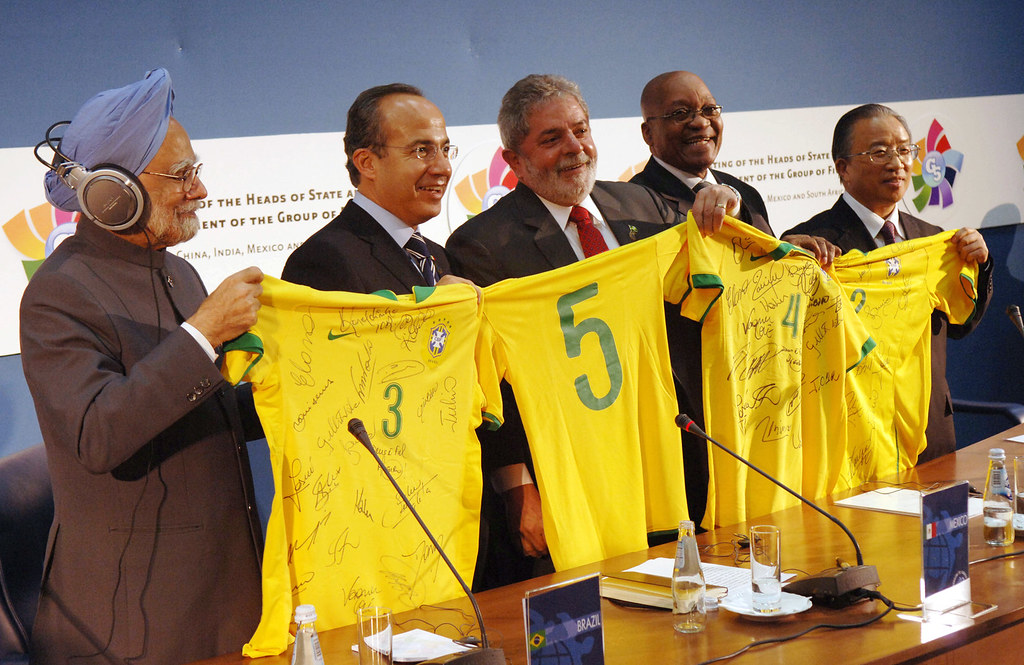
President Luiz Inácio Lula da Silva officially condemned the United States government’s decision to reclassify Brazilian criminal networks as foreign terrorist organizations during a high-level security summit in Brasília this week. Lula argued that these “arbitrary measures” infringe upon Brazilian sovereignty and risk destabilizing delicate local intelligence operations. The diplomatic friction arises as Brazil asserts its right to manage internal security without external interference. Readers will learn how this 2026 policy shift impacts Brazil gang terror designation protocols and the future of bilateral security cooperation.
- President Lula argues US terror labels interfere with Brazilian law enforcement autonomy.
- Diplomatic tensions are rising as Brazil defends its internal security jurisdiction.
- Experts warn the designation complicates international legal cooperation and extradition processes.
Why is the US designating Brazilian gangs as terrorists?
The United States Department of State recently updated its classification for several transnational criminal organizations originating in South America. Washington maintains that groups like the First Capital Command (PCC) now operate with a level of sophistication that mirrors traditional terrorist cells. These groups control significant territory and influence regional politics through violence.
By applying a terrorist label, the US gains broader legal powers to freeze assets and prosecute international collaborators. This shift reflects a growing concern over the influx of illicit substances and the destabilization of trade routes. However, the move has historically caused friction with sovereign nations that prefer a law-enforcement-led approach over a military-style counter-terrorism framework.
Lula’s administration views this as a return to interventionist policies that characterized previous eras of Latin American history. The Brazilian government emphasizes that these groups are criminal enterprises motivated by profit, not political or religious ideologies. This distinction is central to how Brazil manages its domestic policing strategies.
How do these measures impact Brazilian law enforcement?
President Lula warned that labelling domestic criminal networks as terrorists could “undermine” local law enforcement efforts. He argued that international sanctions often disrupt ongoing undercover operations and intelligence gathering. When the US imposes unilateral sanctions, it can inadvertently alert targets who are under surveillance by Brazilian authorities.
Furthermore, the Brazilian Federal Police rely on specific legal frameworks to prosecute organized crime. Reclassifying these groups as terrorists may create legal loopholes or jurisdictional conflicts in Brazilian courts. Lula suggested that such external pressure forces a “one-size-fits-all” solution onto a complex local reality.
“We cannot allow foreign designations to dictate how we protect our citizens or manage our justice system,” Lula stated during his address. “Security cooperation must be based on mutual respect, not arbitrary labels that serve external political agendas.”
What are the diplomatic consequences for Brazil-US relations?
The disagreement marks a significant cooling in the security relationship between the two largest economies in the Americas. Traditionally, Brazil and the US have shared intelligence to combat drug trafficking and money laundering. This new designation threatens to stall joint programmes and data-sharing agreements that have been in place for decades.
The shift in policy aligns with broader strategies outlined by the U.S. Bureau of International Narcotics and Law Enforcement Affairs regarding transnational criminal threats. While the US seeks a more aggressive stance, Brazil is advocating for regional autonomy. This tension could lead to Brazil seeking alternative security partnerships with other global powers.
Diplomatic observers note that the timing of the US decision coincided with increased Brazilian efforts to lead a South American security bloc. By asserting its own definitions of crime and punishment, Brazil is positioning itself as a regional leader. This move challenges the long-standing influence of US security doctrine in the Southern Hemisphere.
The role of financial sanctions and extradition
One of the most immediate impacts of the terrorist designation is the imposition of severe financial sanctions. Any bank or business that interacts with these groups now faces the risk of being cut off from the US financial system. While this targets gang revenue, Lula argues it also creates collateral damage for the broader Brazilian economy.
Extradition processes also become significantly more complicated under the new labels. Brazilian law has strict requirements for extraditing citizens, particularly when the charges involve political or terrorist classifications. Legal experts suggest that the US move might actually make it harder to bring high-level gang leaders to justice in international courts.
Will this shift change international policing strategies?
The global community is watching this dispute closely as it sets a precedent for how organized crime is treated internationally. If more nations follow the US lead, the line between criminal justice and counter-terrorism will continue to blur. This has profound implications for human rights and the rules of engagement for police forces worldwide.
Brazil is currently lobbying the United Nations to maintain a clear distinction between crime and terrorism. The administration believes that maintaining this boundary is essential for protecting civil liberties and ensuring proportional law enforcement responses. Other regional leaders have expressed similar concerns, fearing that their own domestic challenges could be internationalized.
As the 2026 security landscape evolves, the focus remains on whether a compromise can be reached. Brazil continues to call for a multilateral approach that respects national borders while addressing the global nature of crime. The outcome of this dispute will likely define the next decade of security cooperation in the Americas. Ensuring that local expertise remains at the forefront of policing is essential for sustainable stability and the protection of democratic institutions across the region.


