
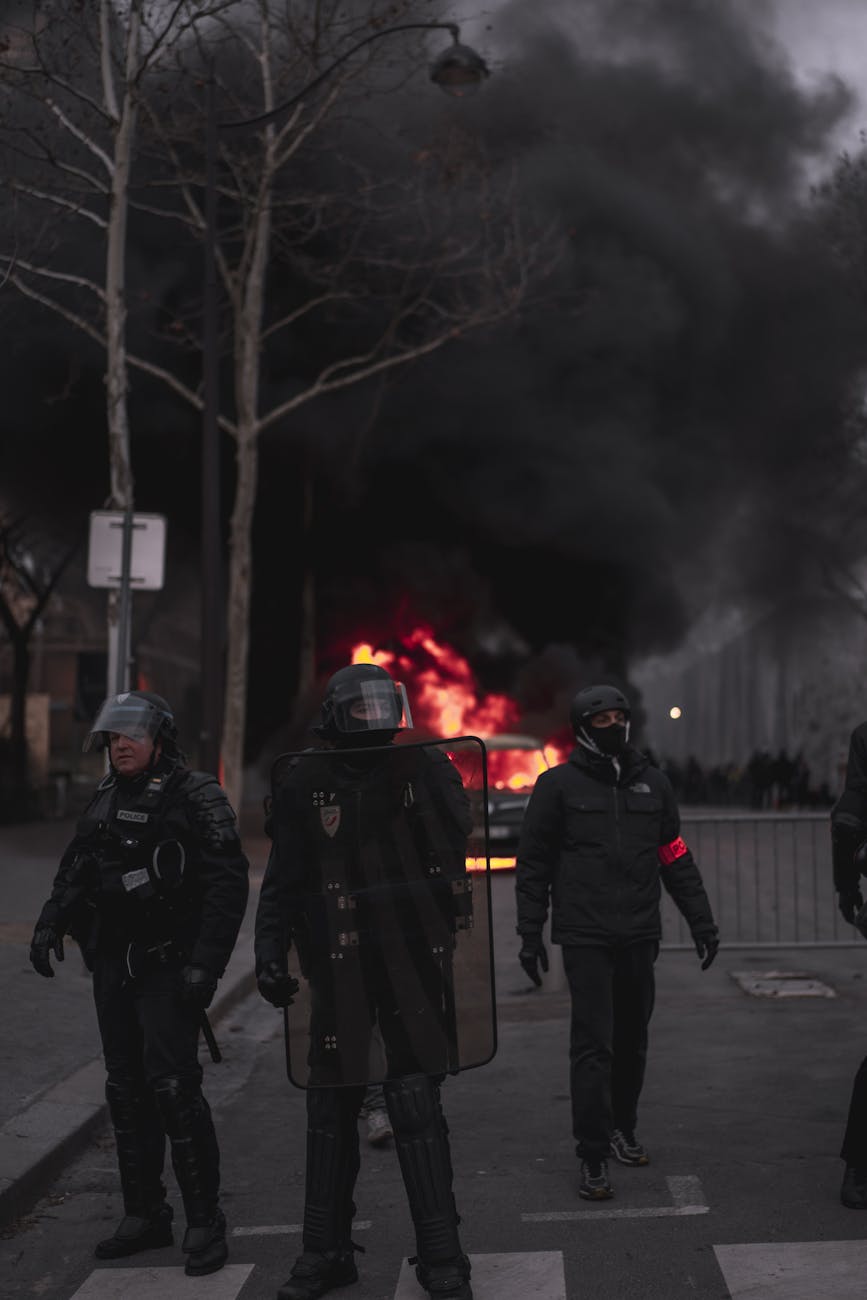
On the night of May 30, 2026, the French Ministry of the Interior reported 416 arrests nationwide following violent clashes that erupted after Paris Saint-Germain’s (PSG) historic Champions League victory over Arsenal. While thousands of fans gathered in the capital to celebrate the club’s first European title, the festivities quickly devolved into civil unrest in several urban centres. This report details the French security response to Champions League riots and the resulting legal actions taken to restore public order.
“The safety of our citizens remains our top priority, even during moments of national sporting pride.” – French Ministry of the Interior spokesperson.
- The Ministry of the Interior confirmed 416 total detentions across France.
- Paris saw the highest concentration of unrest with 283 individuals taken into custody.
- Security forces deployed tear gas and water cannons to disperse crowds on the Champs-Élysées.
- Property damage assessments are currently underway in major French cities.
The highly anticipated final took place in Munich, where PSG secured a 2-1 victory against the London-based Arsenal. For many Parisians, this win represented the culmination of a decade-long pursuit of European football’s most prestigious trophy. However, the joy of the win was soon overshadowed by scenes of chaos. In the hours following the final whistle, security protocols were tested as large groups moved toward central landmarks.
To understand the scale of the unrest, one must look at the historical tension surrounding high-stakes football matches in France. Previous tournaments have seen similar escalations, prompting the government to increase police presence in 2026. Despite these precautions, the sheer volume of celebrants created significant logistical challenges for local prefectures.
How did French authorities manage the nationwide celebrations?
The French government activated a high-alert security plan involving over 12,000 officers across the country. In Paris alone, 5,000 members of the CRS (Companies for Republican Security) were positioned at key transit hubs and fan zones. This massive deployment aimed to prevent the looting and vandalism seen in previous years.
According to official data, the 416 arrests were largely related to the use of illegal pyrotechnics, projectile throwing, and refusal to comply with police orders. Officers in Paris accounted for 283 of these detentions. Most arrests occurred near the Arc de Triomphe and the Parc des Princes stadium. Authorities utilized advanced drone surveillance to identify ringleaders within the crowds.
Interior Minister Gérald Darmanin praised the “professionalism” of the security forces during a late-night press briefing. He noted that while the majority of fans celebrated peacefully, a small minority sought to cause destruction. The minister emphasized that those arrested would face swift legal consequences under the country’s public safety laws.
Why did the celebrations turn into civil unrest?
Tensions began to rise shortly after midnight as groups of masked individuals integrated into the fan celebrations. These groups targeted luxury storefronts along the Champs-Élysées, leading to several smashed windows and attempted thefts. Police responded with targeted interventions to isolate violent elements from the peaceful majority.
In cities like Marseille and Lyon, smaller but equally intense skirmishes broke out between rival supporters and police. Local officials reported that the lack of designated fan zones in some regions contributed to the difficulty of crowd control. The spontaneous nature of the gatherings made it harder for municipal services to maintain cordons.
Public transport was also a major flashpoint during the night. Several Metro stations in Paris were closed early to prevent overcrowding and potential underground confrontations. This move, while necessary for safety, left thousands of fans stranded, increasing the density of pedestrians on the streets and exacerbating the friction between the public and the police.
What are the security implications for future Paris events?
The scale of the arrests has renewed debates regarding the effectiveness of current crowd management strategies. Experts suggest that the integration of real-time data analytics and AI-driven movement tracking will become standard. This approach helps predict where bottlenecks and potential violence might occur before they escalate.
Furthermore, the French government is reviewing its official public safety protocols to better handle mass gatherings during international sporting triumphs. The goal is to balance the public’s right to celebrate with the necessity of protecting private property and infrastructure. Future events may see even stricter regulations on the sale of alcohol and the movement of large groups.
Data from the Ministry shows a 15% increase in arrests compared to the 2024 European Championship celebrations. This trend suggests a growing volatility in post-match environments. Security analysts are now calling for a more decentralized approach to fan management to prevent the concentration of large, unmanageable crowds in single city sectors.
As the city of Paris begins the cleanup process, the focus shifts to the judicial system. Prosecutors are working through the weekend to process the 416 detainees. Many face charges of aggravated assault on police officers and criminal damage. The government remains committed to ensuring that the historic victory of PSG is remembered for the sport rather than the violence. Moving forward, the lessons learned from this night will likely shape the security landscape for the upcoming 2027 international football season.


