
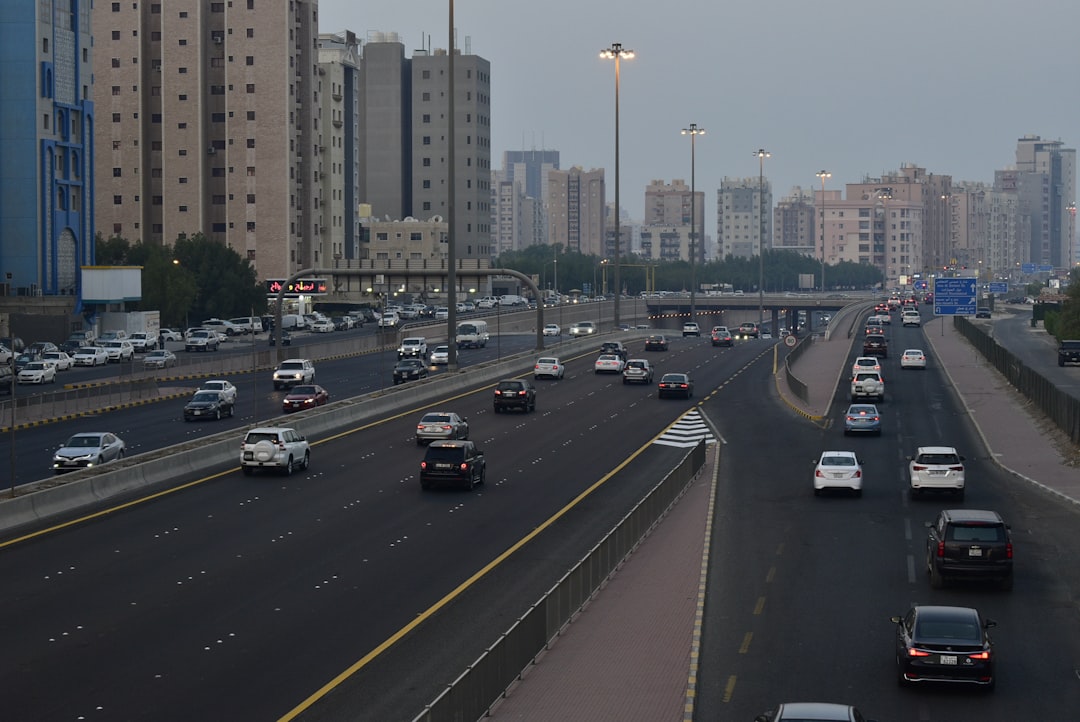
On the evening of October 14, 2026, a multi-vehicle collision occurred on the King Faisal Motorway in Kuwait City as several Iranian missiles transited the airspace overhead. The incident took place during the peak evening rush hour when the visible low-altitude trajectory of the munitions caused widespread panic and distraction among commuters. Local authorities report that the distraction led to a chain-reaction crash involving four passenger vehicles, resulting in minor injuries but significant infrastructure damage. This event underscores the growing concern regarding civilian safety on the ground during periods of heightened regional military activity.
- Distraction from low-flying aerial munitions caused a four-car pileup on a major Kuwaiti motorway.
- Regional authorities are reviewing civilian safety protocols as airspace transit becomes more frequent.
- The incident highlights the ‘conflict distraction’ phenomenon affecting civilian drivers in transit corridors.
In this article, you will learn about the specific causes of the Kuwait motorway missile incident, the current geopolitical climate necessitating these flight paths, and how transport authorities are adapting to protect civilians. Understanding the intersection of regional defence and local traffic safety is essential for residents navigating these volatile corridors.
How did the aerial transit affect ground traffic in Kuwait?
The collision occurred when drivers, startled by the sudden appearance of glowing streaks in the sky, decelerated rapidly or veered from their lanes. Eyewitness video footage circulating on social media shows the missiles moving at high velocity, accompanied by a distinct sonic boom that further disoriented motorists. The King Faisal Motorway, a central artery for Kuwait City, lacks overhead shielding, making the visual impact of such events immediate and overwhelming.
Traffic safety experts have identified this as a classic case of ‘event-driven distraction,’ where a high-stakes external stimulus overrides a driver’s focus on the road. In this instance, the sheer scale and sound of the Iranian missiles transiting toward distant targets created a momentary vacuum of attention. Consequently, the lead vehicle in the cluster braked sharply, causing the subsequent three vehicles to collide in a high-speed shunt.
What is the geopolitical context of the 2026 airspace transits?
The year 2026 has seen a marked increase in the use of Kuwaiti and regional airspace for the transit of ballistic and cruise missiles. As regional powers engage in posturing and precision strikes, the geographic location of Kuwait makes it an involuntary corridor for aerial munitions moving between northern and southern theatres. While these missiles are typically programmed for high-altitude flight, atmospheric conditions or specific trajectory requirements occasionally bring them within visual range of the ground.
This is not an isolated event. Over the past six months, similar sightings have been reported near the border with Saudi Arabia. However, the proximity to a densely populated urban centre like Kuwait City significantly raises the risk profile. The government has maintained a neutral stance, yet the physical presence of foreign munitions in domestic skies remains a point of intense diplomatic discussion.
What do experts say about ‘conflict distraction’ and civilian safety?
Military analysts suggest that the psychological impact of seeing active weaponry from a car window cannot be understated. Dr. Aris Thorne, a specialist in regional security, notes that the visual presence of missiles creates a ‘theatre of war’ atmosphere in civilian zones. This atmosphere triggers a fight-or-flight response that is incompatible with safe driving practices on a crowded motorway.
Furthermore, the International Civil Aviation Organization (ICAO) provides frameworks for managing civil airspace during conflicts, but these often focus on aircraft rather than ground-based civilian responses. Data from the 2026 Regional Transport Safety Report indicates that traffic accidents in transit zones increase by 15% during periods of reported aerial activity. This statistic highlights a hidden cost of regional instability that goes beyond direct military casualties.
How are Kuwaiti authorities responding to the motorway risk?
In response to the King Faisal Motorway incident, the Kuwaiti Ministry of Interior has proposed several mitigation strategies. These include the installation of advanced early-warning systems that can push real-time alerts to mobile devices and in-car infotainment systems. The goal is to inform drivers of potential aerial transits before they occur, reducing the element of surprise that leads to panic braking.
Additionally, there are discussions regarding the reinforcement of motorway lighting and the use of digital signage to provide calm, instructional messaging during events. By normalizing the occurrence through official communication, authorities hope to reduce the visual shock that currently plagues the city’s drivers. Emergency response teams have also been repositioned closer to major intersections to ensure rapid clearance of accident scenes during such events.
What are the long-term implications for regional commuters?
The persistent threat of aerial transit suggests that ‘conflict-aware driving’ may become a necessary skill for residents in the Middle East. Transport planners are now looking at architectural solutions, such as tinted sound barriers or tunnel extensions, to shield drivers from the sky in high-traffic areas. These measures, while expensive, represent a long-term commitment to maintaining civilian normalcy amidst regional friction.
For the individual driver, the takeaway is the importance of maintaining situational awareness without succumbing to external distractions. As the regional landscape continues to evolve, the integration of military activity into the periphery of daily life requires a new level of psychological and physical preparedness. Staying informed through official government channels and maintaining a consistent speed during sightings can significantly reduce the risk of secondary accidents on the road.


