
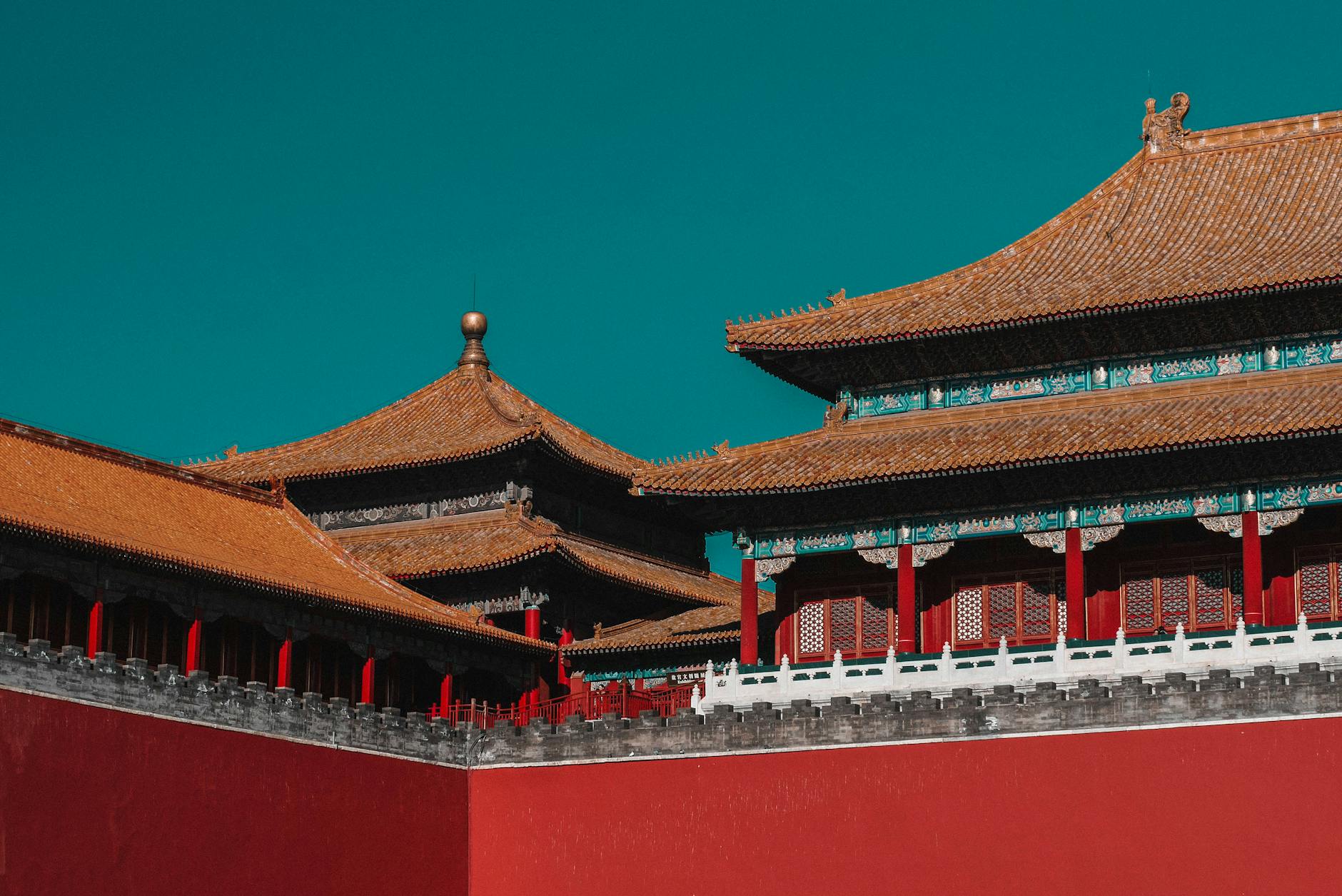
U.S. President Donald Trump arrives in Beijing this week for high-stakes discussions with President Xi Jinping, seeking significant economic concessions while his diplomatic leverage is increasingly hampered by the escalating conflict in Iran. As the American administration attempts to rebalance trade relations and address regional security, it faces a Chinese leadership that has recently consolidated domestic power to a degree not seen in decades. This meeting occurs at a pivotal moment where Washington’s focus on the Middle East provides Beijing with a strategic opening to assert its influence on the global stage.
The timing of the visit is particularly significant following the 19th Communist Party Congress, where Xi Jinping’s political philosophy was enshrined in the national constitution. This elevation has granted Xi an unprecedented mandate to pursue the “Chinese Dream” of national rejuvenation. Meanwhile, the Trump administration finds its foreign policy resources stretched thin as it navigates the fallout from its stance on the Joint Comprehensive Plan of Action (JCPOA) and rising tensions with Tehran.
Asymmetric Leverage in Beijing
Diplomatic analysts suggest that the power dynamic between the two leaders has shifted since their first meeting at Mar-a-Lago. While President Trump is expecting a “wild” and grand welcome—termed a “state visit-plus” by Chinese officials—the underlying reality is one of calculated hospitality. China intends to use the pomp and circumstance to project an image of equality with the United States, even as it maintains a firm stance on its core interests.
The conflict in Iran serves as a significant distraction for the U.S. State Department and the Pentagon. By being forced to prioritise the Persian Gulf, the United States has less capacity to challenge China’s maritime claims in the South China Sea or its economic expansion through the Belt and Road Initiative. This distraction creates a vacuum that Beijing is more than willing to fill with its own diplomatic and economic alternatives.
“The United States is currently fighting a multi-front diplomatic war, and the tension with Iran is consuming the oxygen that would otherwise be used to pressure China on trade and security issues.”
The Iran Shadow Over Global Diplomacy
The Iranian situation is not merely a regional issue; it is a direct factor in U.S.-China relations. China remains one of the largest buyers of Iranian oil and has consistently advocated for the preservation of the nuclear deal. Any attempt by the U.S. to impose secondary sanctions on Chinese entities doing business with Iran could lead to a sharp escalation in trade hostilities, further complicating Trump’s goal of reducing the trade deficit.
Furthermore, Washington needs Beijing’s cooperation to maintain pressure on North Korea. However, with the U.S. taking a hardline stance on Iran, China may be less inclined to follow the American lead on Pyongyang. Beijing often views these geopolitical issues as interconnected, using its influence in one area to gain concessions in another.
Economic Deals and the Trade Deficit
A central pillar of the visit is the pursuit of multi-billion dollar trade deals. The U.S. delegation includes executives from major corporations in the energy, manufacturing, and agricultural sectors. These deals are intended to provide the President with a tangible victory to bring back to his domestic base, addressing the long-standing grievance regarding the trade imbalance between the two nations.
Current data indicates that the U.S. trade deficit with China remains a point of contention, reaching nearly $350 billion annually. While the signing of Memorandums of Understanding (MoUs) during the visit may provide positive headlines, economists warn that these are often non-binding and may not result in long-term structural changes to the Chinese economy. The challenge for the U.S. is to move beyond ceremonial purchases toward systemic market access.
Regional Security and Maritime Claims
Security issues, particularly in the Indo-Pacific region, remain a high-priority topic for the summit. The U.S. continues to advocate for a “free and open Indo-Pacific,” a concept that often clashes with China’s territorial assertions. However, the American ability to project naval power and maintain a robust presence in the region is increasingly influenced by the budgetary and operational requirements of the Middle Eastern theatre.
China has used this period of American preoccupation to strengthen its military installations on reclaimed islands. The lack of a unified U.S. focus allows Beijing to set the pace of regional developments. For America’s allies in the region, such as Japan and South Korea, the outcome of this summit will be a litmus test for the continued reliability of U.S. security guarantees in the face of a rising China.
Implications for the Global Order
The shift in leverage has profound implications for the international rules-based order. As the U.S. adopts a more protectionist and isolationist posture, China is positioning itself as the new champion of globalisation and climate cooperation. This role reversal was evident during Xi’s recent speeches, where he presented the “Chinese model” as a viable alternative for developing nations.
For global markets, the rapport between Trump and Xi will determine the level of volatility in the coming months. A successful summit could lead to a period of relative stability, while a failure to find common ground on Iran or trade could trigger a new round of tariffs and diplomatic cooling. Investors are closely monitoring the rhetoric coming out of Beijing for signs of either reconciliation or further entrenchment.
The evolving relationship between these two superpowers is no longer defined solely by bilateral trade, but by their competing visions for global leadership. As President Trump seeks to navigate the complexities of his “America First” policy against the backdrop of Middle Eastern instability, he must contend with a Chinese leader who is more confident and better positioned than ever before. The decisions made this week in Beijing will resonate far beyond the borders of the two nations, shaping the geopolitical landscape for the next decade.


