
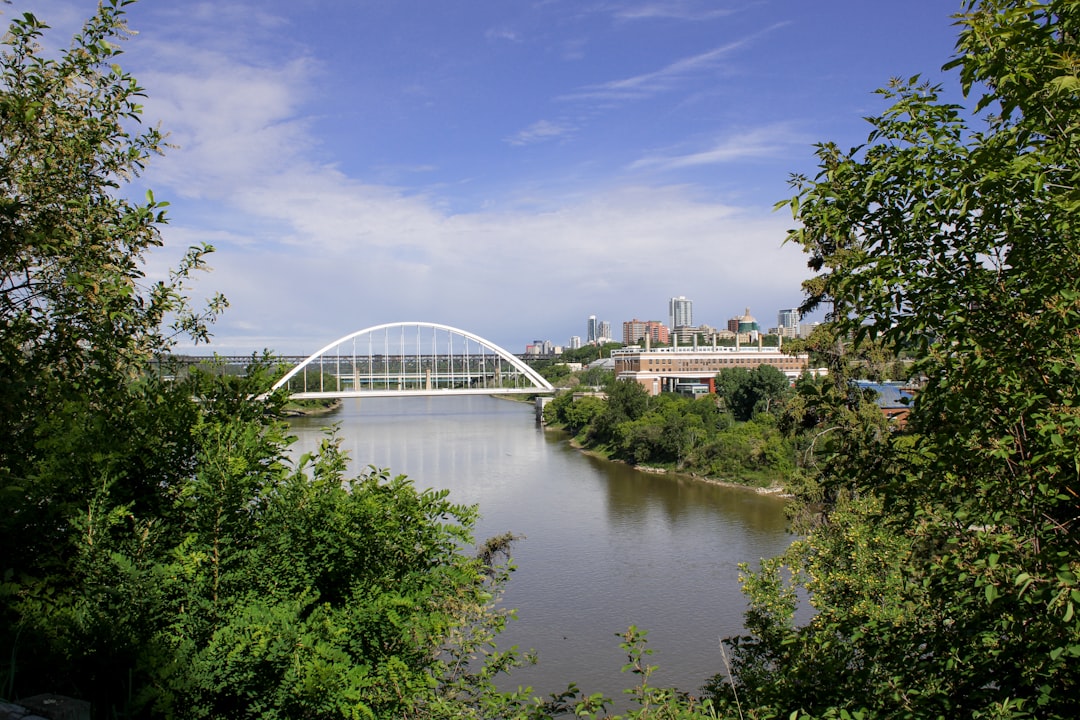
Edmonton, Alberta – The east sidewalk of the iconic High Level Bridge has been closed indefinitely following significant riverbank erosion on its southeast side. Recent heavy rainfall has compromised the slope adjacent to the wooden guardrail, leading to immediate safety concerns for pedestrians and cyclists. The City of Edmonton has initiated an urgent assessment to determine the full extent of the damage and to plan necessary repairs. This closure impacts daily commuters and recreational users, highlighting the growing challenges of urban infrastructure resilience.
- The east sidewalk of Edmonton’s High Level Bridge is closed due to riverbank erosion.
- Heavy rainfall recently caused the slope next to the guardrail to fail.
- The City of Edmonton is conducting geotechnical assessments to ensure public safety.
- Commuters and pedestrians must seek alternative routes across the North Saskatchewan River.
The High Level Bridge, a vital multi-modal artery spanning the North Saskatchewan River, connects downtown Edmonton with the city’s south side. Its east sidewalk is a popular route for thousands of pedestrians and cyclists daily. The recent instability underscores the vulnerability of critical infrastructure to environmental factors.
City officials moved swiftly to secure the area, erecting barriers and posting clear signage. This proactive measure prevents potential accidents from further slope degradation. The bridge itself, including vehicle and LRT traffic, remains open and structurally sound, as the erosion is localized to the pedestrian pathway’s immediate vicinity.
What Caused the Riverbank Instability?
The primary catalyst for the recent riverbank failure was a period of intense, prolonged rainfall. This precipitation saturated the soil, significantly increasing its weight and reducing its shear strength. The North Saskatchewan River Valley, characterized by its steep slopes and varied geological composition, is naturally susceptible to erosion.
Geotechnical engineers explain that the combination of heavy water infiltration and the natural gradient of the riverbank created conditions ripe for slope failure. Over time, continuous erosion from river flow at the toe of the slope also contributes to overall instability. This recent event serves as a stark reminder of these ongoing geological processes.
How Does This Impact Edmonton Commuters and Pedestrians?
The closure forces pedestrians and cyclists to reroute, primarily to the west sidewalk of the High Level Bridge or the nearby Walterdale Bridge. This shift increases congestion on the west side, which was not designed for the additional volume. Commuters face longer travel times and adjusted routines.
For many, the east sidewalk offers more direct access to specific destinations on either side of the river. Its closure disrupts established travel patterns. City authorities advise all users to plan their journeys accordingly and to exercise caution on alternative routes.
What are the City’s Immediate Safety Measures and Future Plans?
Upon discovering the erosion, city crews immediately secured the affected area. Geotechnical experts are now conducting comprehensive surveys and ground investigations. These assessments will provide critical data on the subsurface conditions and the precise extent of the slope failure.
Repair strategies will depend heavily on these findings. Potential solutions could include slope regrading, installation of retaining structures, or bioengineering techniques involving vegetation. The city aims to implement a permanent solution that restores safety and prevents future recurrences. However, the timeline for these repairs remains uncertain.
Preventing Future Erosion: Long-Term Solutions for River Valley Infrastructure
This incident highlights a broader need for enhanced infrastructure resilience in Edmonton’s river valley. Climate change projections indicate an increased likelihood of extreme weather events, including heavy rainfall. Proactive measures are becoming increasingly vital.
Long-term strategies may involve more frequent geotechnical monitoring of critical slopes, particularly those supporting key infrastructure. Investing in advanced erosion control technologies and comprehensive stormwater management plans will also be crucial. These efforts aim to safeguard both public safety and the city’s vital assets. Insights into climate change impacts on Canadian infrastructure, including geological stability, are detailed in various governmental reports, such as those published by Natural Resources Canada on infrastructure resilience.
Expert Perspectives on Geological Stability
Geotechnical engineers consistently emphasize the dynamic nature of river valley environments. They note that water infiltration is a primary driver of slope instability. Implementing robust drainage systems and selecting appropriate construction materials are key to mitigating risks. Regular inspections can detect early signs of distress, allowing for timely interventions before significant failures occur.
The city’s response to the High Level Bridge situation will likely inform future infrastructure planning. It underscores the importance of integrating geological and climatic considerations into all stages of urban development. This proactive approach ensures the long-term safety and functionality of Edmonton’s essential infrastructure.
The High Level Bridge sidewalk closure serves as a critical reminder of the ongoing interplay between urban development and natural forces. Edmontonians must adapt to these changes, while the city prioritizes robust, resilient infrastructure solutions. Continued vigilance and strategic investment will be essential to navigate these environmental challenges effectively.


