
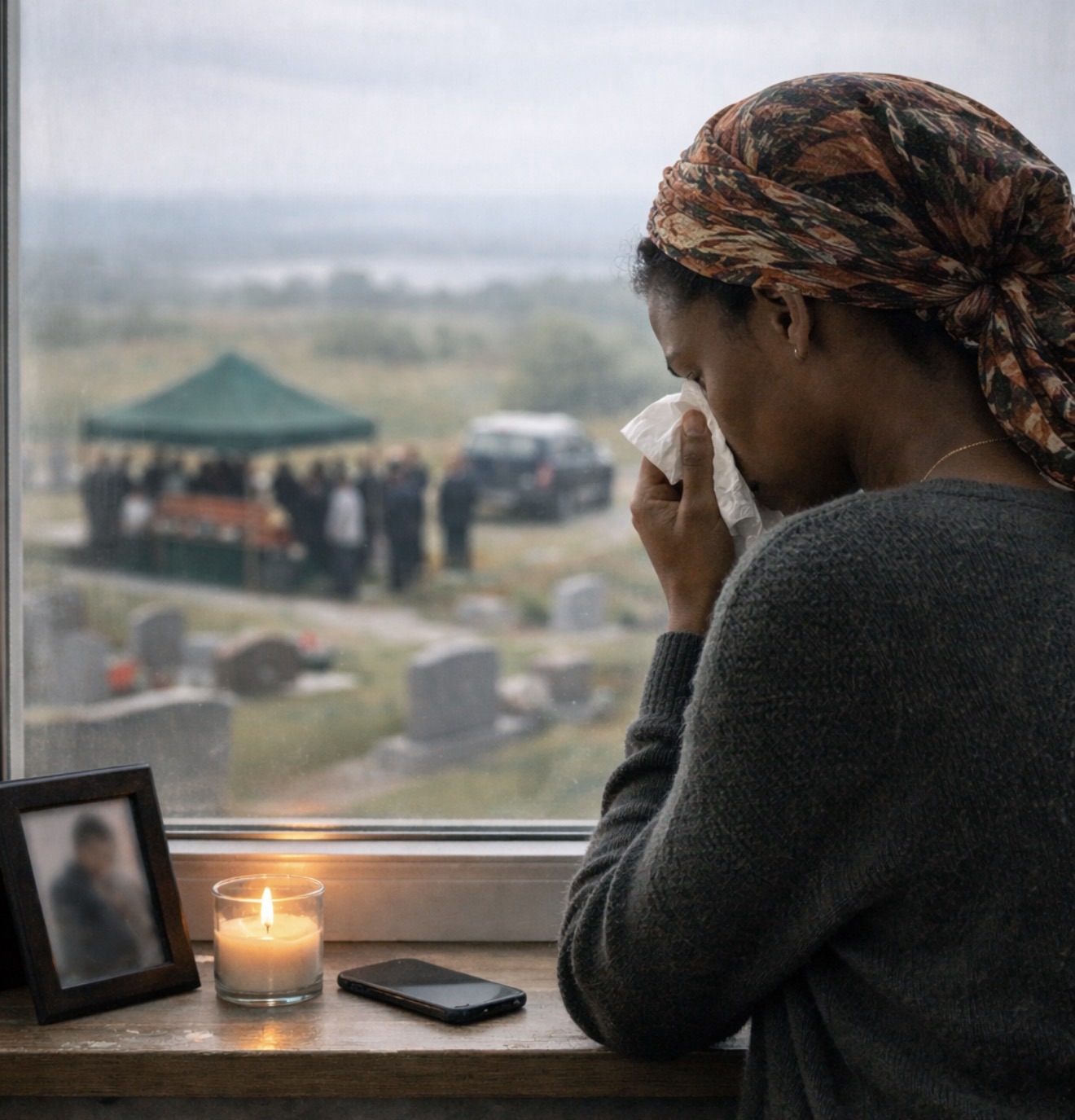
In 2024, I learned what it meant to grieve from a distance. It happened during the holidays, just after I had celebrated a memorable milestone; one of those moments that should have marked a turning point. Instead, grief arrived.
This kind of grief didn’t come with a holiday dish at the door or arms wrapped tightly around me. It was the kind that shows up quietly, while the world around you echo loud with celebration.
December has a way of reminding us of where we are not. We don’t talk about this enough
For many newcomers and immigrants, the Christmas and holiday season carries a particular heaviness. Everywhere you turn, there are conversations about going home; about flights booked months in advance, family reunions planned with care, traditions dusted off and repeated. And for some of us, there is an unspoken truth we learn to carry gently: home is far away, and grief has found us here instead.
When newcomers arrive in a new country, much of the focus is on settling in i.e. finding work, building stability, supporting loved ones back home. Rarely do we stop to consider who might be left behind over time. Years pass quietly. Five years turn into ten. And then one morning, you wake up to the news that someone you loved; someone you assumed you would see again is gone. Just like that!
In those moments, you begin to question everything. The choice to leave. The life you are building. Whether one form of progress must always come at the cost of another. You wonder, silently, if one kind of suffering was traded for another.
Loss does not wait for paperwork to be approved or savings accounts to grow. It does not pause because flights are expensive or because you’ve exhausted your vacation days and asking for time off feels risky. When someone you love dies back home, grief crosses borders effortlessly even when you cannot.
Grieving from a distance often begins with a phone call that comes at an odd hour. It means trying to sound strong over a crackling line, swallowing tears so loved ones don’t worry about you too much. It means watching funerals through screens, squinting to recognize faces, mourning the absence of rituals you were raised to believe mattered deeply.
I once heard this statement from a grief therapist “There is a unique ache in knowing exactly where you wish you were and knowing you cannot get there.” And she was right!
During the holidays, that ache sharpens. Christmas songs play in grocery stores. Lights flicker everywhere. People ask casually, Are you going home this year? And you smile politely, offering a shortened version of the truth. You say, Not this time, instead of explaining the cost of airfare, immigration limits, or the responsibilities that tether you where you are.
So, you carry your grief quietly.
Many immigrants learn to grieve in fragments. A candle lit alone in an apartment. A familiar dish cooked on Christmas Eve, even if no one else knows its significance. A whispered prayer said in a language that feels safer than English when your heart is breaking. Occasional phone calls with siblings or cousins when time zones allow. But nothing quite replaces being there in person. Absolutely nothing does.
Grief from a distance is often lonely not because there are no people around, but because few understand the layered weight of it. There is the sadness of loss, yes, but also the guilt of not being present. The gratitude for opportunity mixed with the pain of separation. The constant negotiation between survival and sorrow.
And yet, somehow, life continues.
You go to work. You respond to emails. You show up to gatherings when you can. You learn to carry grief alongside responsibility not because it is easy, but because you have no other choice.
If you are grieving from a distance this holiday season, I want you to know this: your grief counts. It is not smaller because you were not there. Love does not weaken with distance, and neither does loss.
And if you know someone who is far from home and hurting, remember that presence does not always mean solutions. Sometimes it looks like a message sent without expectation. A check-in that doesn’t rush a response. A willingness to sit with discomfort instead of trying to brighten it away.
The holidays do not have to be joyful to be meaningful. For many newcomers and those far from family, Christmas becomes a season of remembering of holding on, of learning how to honour those we have lost while continuing to build a life where we are.
Grieving from a distance is not a failure of belonging. It is proof that love travels quietly, stubbornly and across borders, time zones, and years.
And sometimes, surviving the season is enough.
By Stella Igweamaka
Publication Blurb
Grieving From Afar During the Holidays is a reflective, story-driven essay that explores the emotional reality of loss for immigrants, newcomers, and anyone living far from family during the Christmas season. Written with tenderness and lived insight, the piece examines how grief shows up across borders when travel is impossible, rituals are missed, and mourning happens quietly. The article invites readers to reconsider togetherness, compassion, and what it truly means to hold space during the holidays.
Stella Igweamaka holds an MBA from the University of Lagos in Nigeria and is proud to call Amiskwacîwâskahikan (Edmonton) her home. She is passionate about using research and storytelling for impactful change and was recently featured on CBC News for her work with Black Canadian Women in Action on the adultification of Black girls in Canada. You can find more of her work on www.stellaigweamaka.com


